
Heat Pump Cost Calculator
Estimate your heat pump's exact running cost per hour, day, and month. Built for US homeowners.
Calculate Heat Pump Running Cost
Heat Pump vs Gas Furnace — Monthly Cost Comparison
| Scenario | Heat Delivered | Heat Pump | Gas Furnace |
|---|---|---|---|
| Small home (40,000 BTU/hr, 8 hrs/day) | 9.6 MMBtu | ~$185/mo | ~$150/mo |
| Medium home (60,000 BTU/hr, 10 hrs/day) | 18.0 MMBtu | ~$347/mo | ~$282/mo |
| Large home (80,000 BTU/hr, 12 hrs/day) | 28.8 MMBtu | ~$556/mo | ~$451/mo |
Both columns deliver the heat shown in the second column, so they are directly comparable. Heat pump at seasonal COP 2.8 (about $19.30 per million BTU delivered); gas furnace at 92% AFUE (about $15.65). Electricity 18.44¢/kWh (EIA Electric Power Monthly, Table 5.6.A, May 2026); natural gas $1.44/therm (EIA, winter average, November 2025 - March 2026 (US); December 2025 - February 2026 (by state)). At national average prices gas is the cheaper fuel per BTU; the heat pump wins where electricity is cheap relative to gas.
What Affects Heat Pump Running Costs?
COP Explained
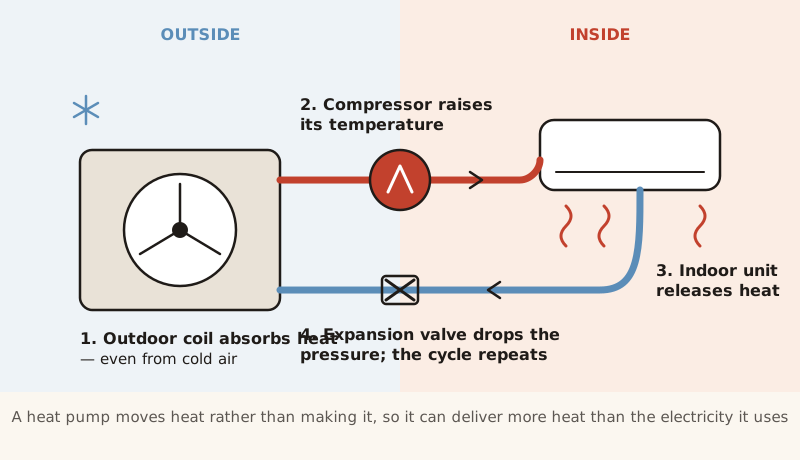
Coefficient of Performance is heat delivered divided by electricity consumed. A COP of 3.0 means three units of heat for every one unit of electricity. ENERGY STAR describes air-source heat pumps as delivering "up to three times" the energy they use, and that is the honest ceiling for a whole season. Higher figures you see quoted — COP 4 and above — are measured at mild outdoor temperatures around 47°F, which is precisely when you need the least heat. COP falls as it gets colder, so the number that decides your bill is the seasonal average, not the best-case rating.
Climate Impact on Efficiency
Both capacity and efficiency drop as outdoor temperature falls, so we model seasonal COP from a state's average winter temperature: about 3.2 where winters average 45°F or above, 2.8 around 35–45°F, 2.4 around 25–35°F, and 2 below 25°F. In Minnesota or Wisconsin, plan on the bottom of that range through January and expect backup heat to run on the coldest nights.
Size Matters
An oversized heat pump short-cycles — it turns on and off too frequently — wasting energy and increasing wear. An undersized unit runs constantly and still can't maintain temperature. Use a Manual J load calculation or consult a licensed HVAC contractor to confirm correct sizing before purchasing.
Electricity rates vary widely by region. Use our state-level heating cost data to apply your local rate to these estimates. If you also have gas service, our gas vs electric heating cost guide shows how a heat pump stacks up against a gas furnace at today's prices.